Sitemap## Realworld AI Use Cases

I wanted to have a publication that helped share tips and tricks from my consultancy where we implement ai for companies like the Olympic team, the Stock Exchange and other B2C companies.
It’s a new year and we just had our annual planning day on the beautiful beach of Waiheke, remember it’s summer in the upside down country of New Zealand.
Not a Medium member? Keep reading for free by clicking here.

This beach is a ferry and a bus away from my office and it’s so good!
Side note, Google Gemini is really good at fixing your hair if you take a photo and the wind makes it go wonky.

How great is AI haha
Anyway, one of the questions we discussed was how on earth do we hire a developer now?
What traits should we look for?
I thought it was a good chance to ask this question and then to also get the comments section sparking as I’m sure that people will have opinions on this.
To make it fun at the end of section I have a points system. Give yourself a score out of 5 for each question and then total it up, there is 9 questions in total.
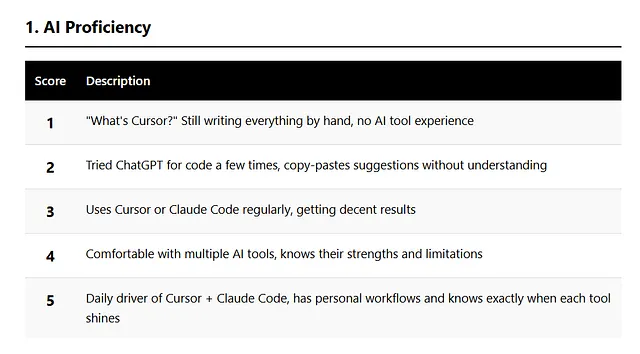
#1 — How good are you at AI?
The first thing that jumps out is how good is the developer at AI. This is an interesting test isn’t it because it’s something we have never really had to consider before.
So what exactly does being good at AI mean?
To start with, you are going to need to have used Cursor or Claude Code and preferably both so that you can see how they work. If you haven’t been using these tools it’s going to be difficult as they take a while to master.
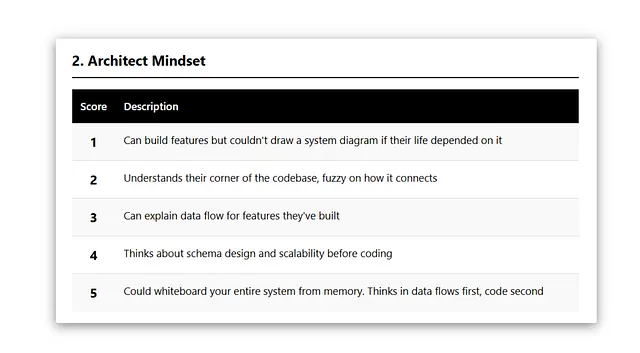
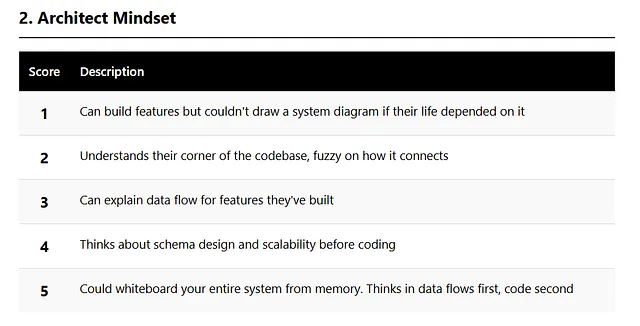
#2 — ==The Architect Mindset==
If AI is doing all your code, then you need to be a good architect and good at steering the ship. Since you aren’t spending 80% of your day fighting syntax errors (well to be fair, honestly at times it feels like you can spend 80% of your day watching the AI fight with its own syntax errors), you need to be spending that time thinking about system design.
Can you visualise the data flow? ==My CTO complains that his job is like 90% architectural diagrams these days haha.==
Do you understand how the database schema will hold up?
==We used to hire people who were great at memorising libraries.== Now, I want someone who has read Designing Data-Intensive Applications and actually understood it and knows how to apply it.

This is a great book and if you are looking to go a bit deeper then this will help you
View this book on Amazon here. Let me know if there are better books than this one
If you can’t design the house, it doesn’t matter how fast the AI can build the walls.
#3 — The “Senior Reviewer” Capability
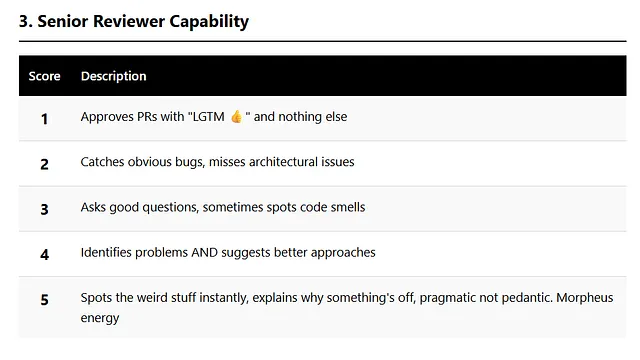
This is a hard one. We have also asked ourself, like what is the new ideal form of a pull request now? We used to have our nice little standards with the nice little checkboxes and now it’s so easy to slam dunk a mammoth change if you aren’t careful.
But the thing I want is ‘senior reviewer’ capability. Whatever the heck senior means. For me it’s that you tell me when things are strange, you can articulate clearly why something isn’t working and what should be done instead. It doesn’t have to mean slow and stingy and risk averse, in fact a lot of the ‘senior’ engineers I know are extremely pragmatic and they give me strong Morpheus from the Matrix vibes somehow.
It also means the products you involve with generally work and they are performant and to a high level of quality.
What this capability is trying to protect against is just hiring someone who piles up code and doesn’t really know how to do anything but that. AI code is great but it can get turn into the Wild West in the codebase pretty fast.
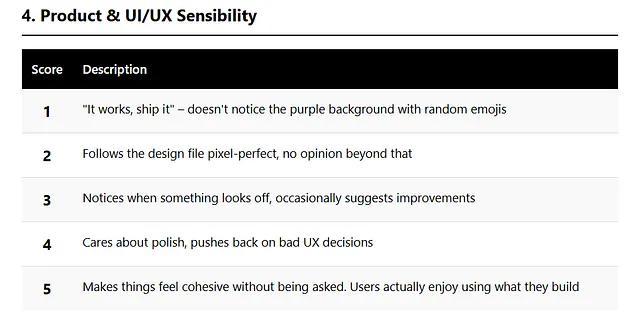
#4 — Product & UI/UX Sensibility
I purposely didn’t use the word taste because I hate how many people talk about taste. It’s like suddenly you are meant to be a good coder and also one of those people who tells me why a certain wine is really good because 2015 had a really great summer.
But clients now aren’t caring as much about, does this site work? They are more like, ‘whoa why is everything purple with those stupid emojis?’. To be fair they do care that the sites work, but it’s more that it is easier to make things work than it used to be.
I do now think that the user experience is more important. Also, I don’t know if it’s just me because I live in New Zealand but I’ve never met a user experience designer, do they exist? If they do then I’m not sure what that says about New Zealand. Maybe that would explain our traffic.
I think it’s just the wider part about caring isn’t it. Sure the AI can do things quickly, but you want someone who cares about things like polish and just making it look cohesive.
#5 — Articulation
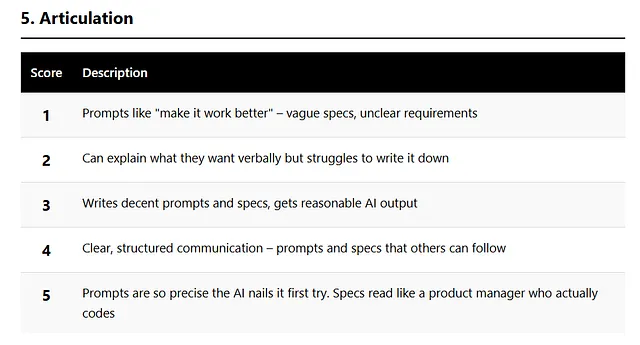
Now that we have to ‘code’ in English or whatever your native language is, articulation is important. I’d say this is product articulation but also the better you are at clearly articulating intent the better you are going to get a good result.
If you can’t write a clear prompt or a detailed spec, you are going to struggle to get value out of these tools.
#6 — Debugging Intuition
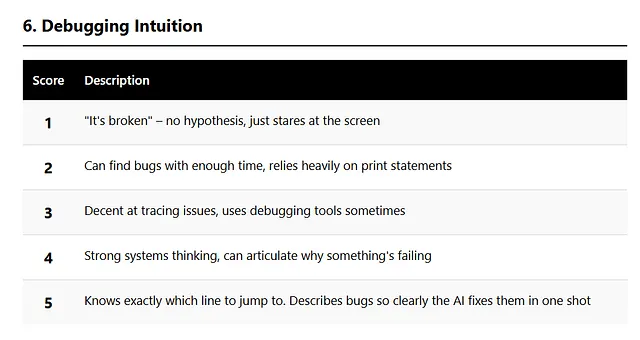
Also the one I notice at my office the most is the articulation of bugs. That is where the systems thinking skill comes into play but if you are good at articulating bugs and knowing when you need to actually jump to a certain line in the code base you can make everything way faster.
P.S for this one, use Cursor debug mode, it is great.
#7 — Security & Data Privacy Hygiene
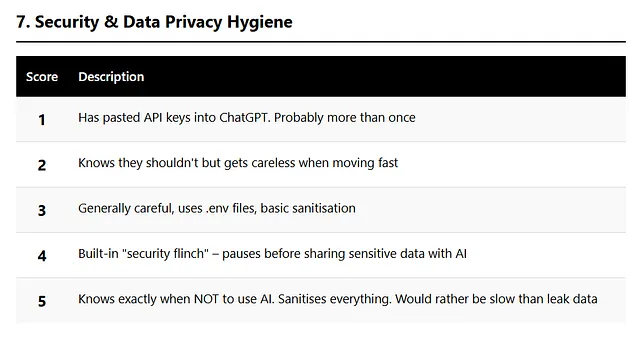
This is the boring but scary part. With AI, it is terrifyingly easy to accidentally paste API keys, customer data, or sensitive IP into a chat window.
I need a developer who has a built-in “security flinch.” Do they know when not to use the AI? Do they know how to sanitise data before feeding it to the model? If they are reckless with data in the name of speed, that’s a dealbreaker.
This is something you have to be constantly vigilant about as well. This will only become more important as time goes on.
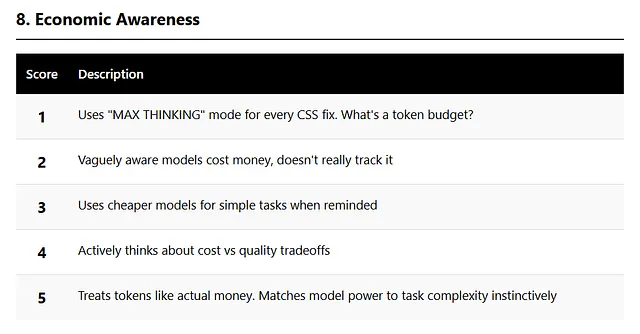
#8 — Economic Awareness (Model Management)
Not every problem requires the most expensive model. This is a new skill: Cost Management. Do you know when to use a “thinking” model (which costs more and takes longer) versus a quick, cheap model for simple tasks, like Composer on Cursor.
It sounds trivial, but as we scale, a developer who uses the “MAX THINKING option” for every tiny CSS fix is going to blow out the budget. I want someone who treats tokens like money because you know it actually is. It’s more just a mindset.
#9 — High Agency & Velocity
Finally, I want someone who uses these tools to move systematically fast. I put the word systematically because I think you can go stupidly fast and that isn’t fast if you just smash into a brick wall.
But it’s more like pushing the envelope. It might be that you use that time to experiment with new approaches or learning more. You know it might not just mean smashing out features, but it’s just a high intent.
It’s funny because AI has made it easy to ‘hide’ as a developer. You do your job in the time you were allocated and everyone is happy. Yeah that’s kind of the average way to look at things. I would prefer just a bit more energy and a bit more questioning of what is possible than just doing what you are told.

Conclusion
Section titled “Conclusion”Is this a good framework for hiring do you reckon?
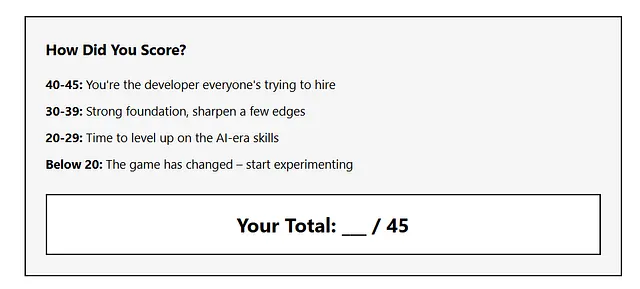
Of course these types of things make it a bit unicorny to get 45 points. I wouldn’t get 45 and I wouldn’t expect everyone to be perfect at everything but it’s fun having a stab at what makes a good developer.
I’m open to feedback and refining it. Knowing me, I’ve probably made a few things where you are going to critique the absolute heck out of me and you know, I’m all here for it. That will only make it a better framework for finding a good developer.
Before you go
Section titled “Before you go”Subscribe to my free Substack newsletter because you get the following:
- A brand-new article for executives on Sunday that’s only posted on Substack.
- Links to every Medium post I’ve written in the past week
- Book recommendations every week for you to spend your Audible credits on
I’m an Amazon associate, I get a small commission if you make a purchase.


I wanted to have a publication that helped share tips and tricks from my consultancy where we implement ai for companies like the Olympic team, the Stock Exchange and other B2C companies.
I’ll help you code with AI. Cursor tips & Business Strategy. I run a company doing AI for the All Blacks, Olympic Team & the Stock Exchange www.cubdigital.co.nz
Responses (6)
Section titled “Responses (6)”Talbot Stevens
What are your thoughts?
I self-assessed a solid 36/45. But I deal with the damn AIs so the engineers don’t have to. I have synthetic people skills. I’m good at dealing with models. Can’t you understand that? What the hell is wrong with your ATS?1
==My CTO complains that his job is like 90% architectural diagrams these days haha.==
CTOs don’t really do that, apart from maybe in small startups.There are a lot of consultants out there like me that can help your team get up to speed with the new AI development process. It's probably better for your existing team to be built up and trained vs pulling in someone new that will be outperforming…More from Chris Dunlop and Realworld AI Use Cases
Section titled “More from Chris Dunlop and Realworld AI Use Cases”Recommended from Medium
Section titled “Recommended from Medium”[
See more recommendations