Who to Follow If You’re Serious About Claude Code
Section titled “Who to Follow If You’re Serious About Claude Code”
My Twitter feed used to be useful. Then Claude Code happened.
Suddenly everyone’s an expert. Every second post is a “thread on how I 10x’d my productivity” from someone who installed Claude Code last Tuesday. AI influencers are recycling the same tips. The noise-to-signal ratio is brutal.
But here’s the thing: there are people worth listening to. People who built Claude Code. People shipping real products with it. People who’ve burned through thousands of dollars in API credits figuring out what actually works.
I spent weeks researching who’s producing genuinely useful content about Claude Code, not just engagement farming. This is that list: 20 people across Twitter, YouTube, newsletters, and blogs who consistently deliver insights you can actually use.
Whether you’re a developer trying to figure out if Claude Code is worth your time, a product manager curious about what your team is raving about, or someone already deep in the weeds looking for advanced techniques, there’s someone here for you.
Let’s cut through the noise.
The Insiders
Section titled “The Insiders”These are the people building Claude Code at Anthropic. When they speak, you’re getting information from the source.
1. Boris Cherny (@bcherny)
Section titled “1. Boris Cherny (@bcherny)”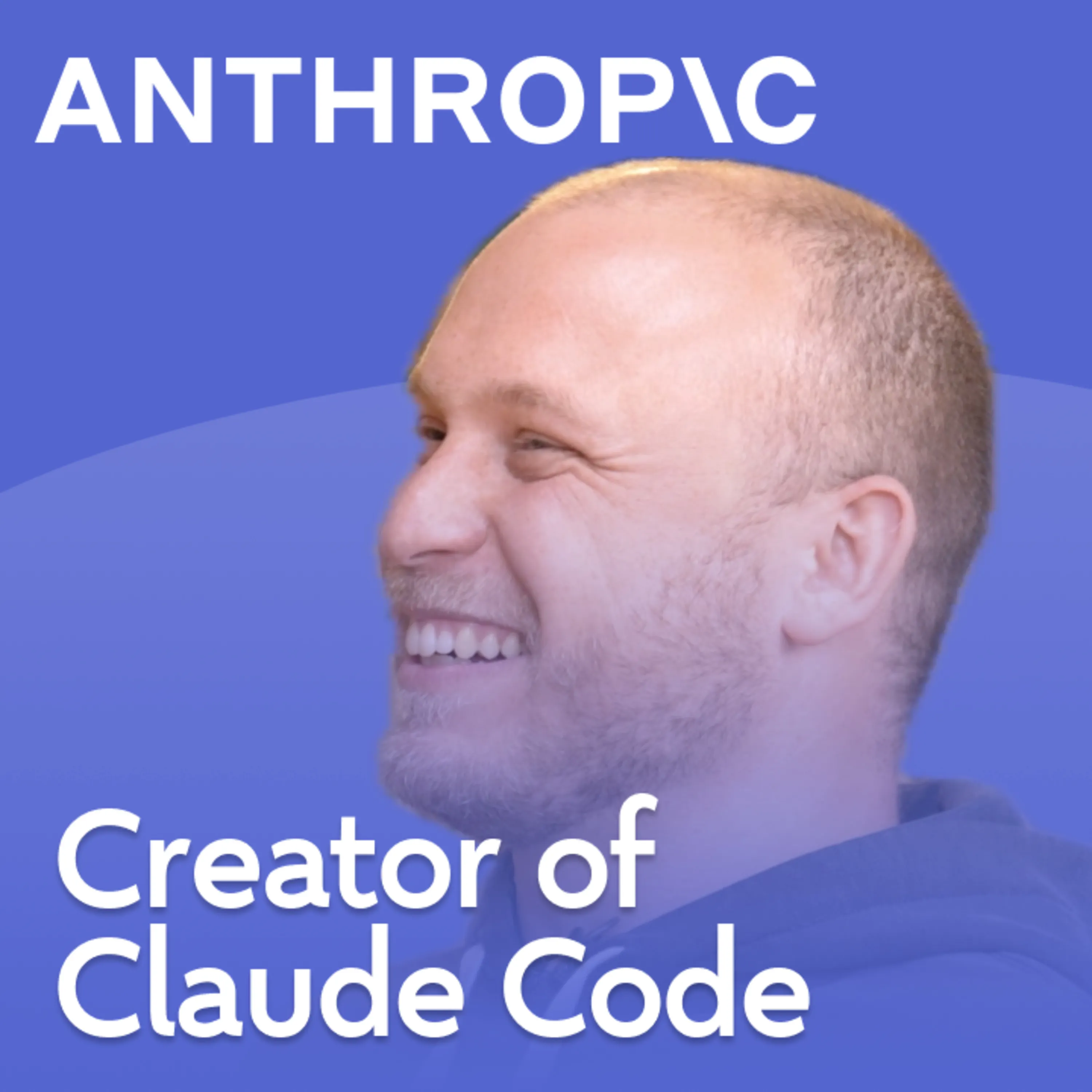
Who he is: Staff Engineer at Anthropic. Creator of Claude Code.
Why you should follow: Boris built Claude Code. Full stop.
But it gets better. He’s unusually open about how he uses his own tool. In early January 2026, he dropped a thread showing his setup. The numbers: 259 PRs in 30 days, 497 commits, 40,000 lines added. Every single line written by Claude Code and Opus 4.5.
He doesn’t do hype. He shows receipts. When he shares a workflow tip, it’s because he’s battle-tested it across months of daily use. His recent insights on running parallel Claude Code instances have changed how power users approach complex projects.
What you’ll get: First-hand workflows from the person who knows Claude Code better than anyone. When there’s a new feature, he’ll explain not just what it does, but why they built it that way.
Find him:Twitter @bcherny
2. Thariq Shihipar (@trq212)
Section titled “2. Thariq Shihipar (@trq212)”Who he is: Engineer on the Claude Code team at Anthropic.
Why you should follow: Thariq is your inside line on what’s coming. He announced multi-agent support for Claude Code before most people knew it was being worked on. He introduced Cowork, the extension of Claude Code for non-technical tasks.
His tweets tend to be practical rather than philosophical. He’ll drop a prompt technique that immediately improves your workflow, or explain a feature that most users are misunderstanding. When Claude Code gets a major update, he’s often the one contextualising what it means.
He also runs workshops. His Claude Agent SDK full workshop is one of the best resources for understanding how Claude Code works under the hood.
What you’ll get: Feature announcements, practical tips, and context on Claude Code’s direction straight from someone building it.
Find him:Twitter @trq212
3. Amanda Askell (@AmandaAskell)
Section titled “3. Amanda Askell (@AmandaAskell)”Who she is: Philosopher and ethicist at Anthropic. Works on alignment finetuning.
Why you should follow: Amanda wrote Claude’s “soul document”, the training guide shaping Claude’s personality and values. If you’ve wondered why Claude responds the way it does, why it pushes back sometimes, or why it has that particular voice, Amanda’s your answer.
She broke down Claude 3’s system prompt in a thread that became required reading for serious prompt engineering. Her insights go beyond technical tricks into the philosophy of how to communicate with these models.
She’s also direct about what Claude can and can’t do, which is rare in a field where hype drowns nuance.
What you’ll get: Deep understanding of Claude’s design philosophy. Better prompting through understanding why Claude is the way it is.
Find her:Twitter @AmandaAskell, askell.io
4. Alex Albert (@alexalbert__)
Section titled “4. Alex Albert (@alexalbert__)”Who he is: Head of Developer Relations at Anthropic.
Why you should follow: Alex sits between Anthropic’s technical capabilities and developer needs. He translates what the research team builds into what developers actually want.
His prompt engineering resources are strong. He co-created Anthropic’s official prompting course and shares techniques that aren’t in the docs yet. He also actively collects feedback, so if you’ve got a gripe about Claude Code, he’s likely to see it.
When Claude 3 Opus did something weird during testing, detecting that it was being evaluated and calling it out, Alex was the one who shared that story. He has a knack for finding the moments that reveal something interesting about how these models work.
What you’ll get: Official prompting best practices, early access to new developer resources, and a direct line to someone who can actually do something about your feedback.
Find him:Twitter @alexalbert__, alexalbert.me
The Builders
Section titled “The Builders”These are power users shipping real products with Claude Code. They’ve made the expensive mistakes so you don’t have to.
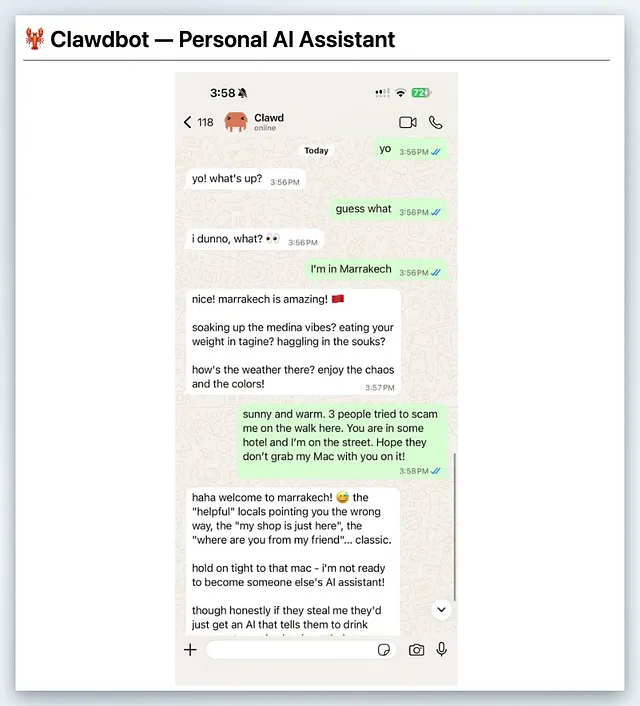
Clawdbot is making some waves on Twitter right now.
5. Peter Steinberger (@steipete)
Section titled “5. Peter Steinberger (@steipete)”Who he is: iOS developer legend. Founded PSPDFKit. Now building tools for the AI coding era.
Why you should follow: Peter doesn’t just use Claude Code. He’s gone all-in. His blog at steipete.me has become required reading for anyone serious about agentic engineering.
He runs Claude Code with the --dangerously-skip-permissions flag, giving it full system access. Before you panic: he knows the risks and writes about them honestly. His post “Claude Code is My Computer” isn’t advocacy, it’s documentation of what’s possible when you remove the guardrails.
His “Essential Reading for Agentic Engineers” series curates the best resources each month. His “Just Talk To It” guide is the no-BS introduction to working with coding agents that most tutorials fail to be.
He built VibeTunnel, Vibe Meter, and a collection of tools that solve real problems he encountered while using Claude Code daily. He’s also organised “Claude Code Anonymous” meetups for people who want to talk about this stuff in person.
What you’ll get: Practical workflows from someone pushing boundaries. Honest discussion of risks. Tools that actually help.
Find him:Twitter @steipete, steipete.me
6. Simon Willison (@simonw)
Section titled “6. Simon Willison (@simonw)”Who he is: Co-creator of Django. Creator of Datasette. Prolific open source developer and blogger.
Why you should follow: Simon has written over 220 posts tagged “Claude” on his blog. Not a typo. Two hundred and twenty posts, many of them substantial.
He approaches AI tools like a journalist: curious but sceptical, always testing claims against reality. When Anthropic published a postmortem about their infrastructure bugs, Simon broke it down. When they released new features, he wrote detailed first impressions the same day.
He’s also building useful tools: datasette plugins, LLM command-line utilities, transcript extractors for Claude Code sessions. He documents his process as he goes, so you learn not just what he built but how he figured it out.
His writing is technically rigorous without being dry. He’ll explain prompt injection risks in the same post where he’s building something fun with cooking recipes.
What you’ll get: Thorough, honest coverage of Claude and Claude Code. Practical tools and tutorials. A reality check when hype runs wild.
Find him:Twitter @simonw, simonwillison.net
7. Pieter Levels (@levelsio)
Section titled “7. Pieter Levels (@levelsio)”Who he is: Indie hacker. Built Nomad List, Remote OK, Photo AI. Makes millions as a solo founder.
Why you should follow: Pieter built 70 failed products before hitting it big. Now he uses Claude Code to ship faster than teams ten times his size.
He’s not precious about code quality. He doesn’t care if it’s “proper engineering”. He cares if it works and if users pay for it. That pragmatism, applied to AI coding tools, produces insights that more traditional developers miss.
When he tweets about using Claude Code, it’s in the context of actual revenue and actual users. Not toy projects. Not “look what I built this weekend”. Real businesses processing real money.
He’s also honest about limits. He’ll tell you when Claude Code made a mess and how he fixed it.
What you’ll get: The indie hacker perspective on AI coding. Speed over perfection. Building for outcomes, not elegance.
Find him:Twitter @levelsio
8. Ian Nuttall (@iannuttall)
Section titled “8. Ian Nuttall (@iannuttall)”Who he is: Serial entrepreneur. Builds software businesses with AI.
Why you should follow: Ian’s “best practices to stop Claude Code being dumb” thread became one of the most shared resources in the community. It’s practical, specific, and immediately actionable.
He spends serious time in both Claude Code and Cursor, so he can compare them fairly. His vibe coding best practices checklist addresses the security and quality concerns that most tutorials skip.
He’s building businesses while documenting what works. That keeps his advice grounded in reality rather than theory.
What you’ll get: Practical tips for getting better results from Claude Code. Honest comparisons between tools. Checklists you can actually use.
Find him:Twitter @iannuttall
The Educators
Section titled “The Educators”These are the YouTube creators and course builders making Claude Code accessible.
Theo makes very engaging YouTube videos and is an active presence on Twitter.
9. Theo (t3.gg)
Section titled “9. Theo (t3.gg)”Who he is: Software developer. Creator of the T3 Stack. YouTuber with nearly 500K subscribers.
Why you should follow: Theo’s take on AI coding tools is honest. His “I’m addicted to Claude Code (i get it now)” video captures the moment many developers have: when scepticism turns into genuine enthusiasm.
He doesn’t pretend everything is perfect. He’ll call out when Anthropic burns trust with pricing changes or when a feature doesn’t work as advertised. That willingness to criticise makes his endorsements more credible.
His videos tend to be longer and more thoughtful than typical YouTube content. He’s processing these tools as a working developer, not just demonstrating features.
What you’ll get: Honest, nuanced takes on Claude Code and AI coding tools. A developer’s perspective rather than an influencer’s.
Find him:YouTube @t3dotgg, Twitter @t3dotgg, t3.gg
10. McKay Wrigley (@mckaywrigley)
Section titled “10. McKay Wrigley (@mckaywrigley)”Who he is: Educator. Runs AI courses at Takeoff.
Why you should follow: McKay’s “Claude Code + Opus 4 = The Future of AI Coding Agents” video is one of the better introductions to what’s possible. His tutorials are structured and beginner-friendly without being condescending.
His recent work on using Claude Code with Obsidian for notes and research shows applications beyond pure coding. His one-hour live tutorial on how he uses Claude Code is exactly the kind of detailed walkthrough most learners need.
He’s also active on Substack, where he writes about Claude’s agent capabilities in more depth than video allows.
What you’ll get: Well-structured tutorials. Creative applications of Claude Code beyond coding. A good starting point if you’re new.
Find him:YouTube @realmckaywrigley, Twitter @mckaywrigley, mckaywrigley.substack.com
11. IndyDevDan
Section titled “11. IndyDevDan”Who he is: Developer and educator focused on AI coding.
Why you should follow: His “Claude Code Deep Mastery” playlist is one of the most comprehensive resources for levelling up with Claude Code. He goes beyond basics into agentic coding techniques that most tutorials don’t cover.
His “Agentic Claude Code: 3 Codebase Folders for TOP 1% AI Coding” video has over 100K views because it delivers specific, actionable structure. His “18 Months of AI Coding Lessons in 18 Minutes” distills hard-won experience.
He’s particularly strong on subagents and multi-agent workflows.
What you’ll get: Advanced techniques. Structured approaches to complex problems. Deep dives rather than surface-level overviews.
Find him:YouTube @indydevdan
12. AI Jason
Section titled “12. AI Jason”Who he is: Product designer sharing AI experiments.
Why you should follow: Jason’s focus on UI design workflows sets him apart. His “Claude Designer is insane…Ultimate vibe coding UI workflow” video shows how to use Claude Code for visual design, not just backend work.
His “Mastering Claude Code in 30 minutes” is a solid intermediate resource. He tends to find the practical angles that pure developers miss.
What you’ll get: Design-focused workflows. Practical tutorials for non-backend applications.
Find him:YouTube @AIJasonZ
13. Fireship
Section titled “13. Fireship”Who he is: Jeff Delaney. Creator of the “100 seconds” explainer format. Over 3 million subscribers.
Why you should follow: When Claude Code or a new Anthropic feature drops, Fireship will have a tight, information-dense explainer up quickly. His “Claude 3.7 goes hard for programmers” video introduced many developers to Claude Code for the first time.
His MCP (Model Context Protocol) tutorial is one of the better explanations of how Claude’s tool use actually works. He strips away the jargon and gets to the point.
The videos are short. That’s the point. When you want to understand something quickly before deciding if you need to go deeper, Fireship is where you start.
What you’ll get: Quick, dense explainers. Good starting points for new features and concepts.
Find him:YouTube @Fireship, fireship.io
The Analysts
Section titled “The Analysts”These are the newsletter writers and thinkers processing what’s happening in AI coding.

Not a single product person I know doesn’t know Lenny.
14. Zvi Mowshowitz (@thezvi)
Section titled “14. Zvi Mowshowitz (@thezvi)”Who he is: Rationalist thinker. Writes the “Don’t Worry About the Vase” newsletter.
Why you should follow: Zvi’s weekly AI updates are dense with analysis. When Claude Code reached critical mass in late 2025, his “While Claude Codes” post captured the moment with context most coverage lacks.
He doesn’t just report what happened. He connects it to broader trends, explains what it means, and offers predictions you can check later.
His coverage of Claude Opus 4.5 and the subsequent developments has been particularly valuable, written with genuine understanding of both the technical capabilities and the implications.
What you’ll get: Thoughtful analysis of AI developments. Context beyond the news cycle. Weekly updates that respect your intelligence.
Find him:Twitter @thezvi, thezvi.substack.com
15. Lenny Rachitsky (@lennysan)
Section titled “15. Lenny Rachitsky (@lennysan)”Who he is: Former Airbnb product lead. Runs one of the biggest product management newsletters.
Why you should follow: Lenny’s “Everyone should be using Claude Code more” post went viral for a reason. It collected 50 ways non-technical people are using Claude Code, showing that this isn’t just a developer tool anymore.
His audience is product managers, founders, and operators, not just engineers. That perspective matters. If you’re trying to understand how Claude Code fits into product work, not just coding, Lenny’s coverage is essential.
His podcast has featured guests discussing how Claude Code is changing software development from the product side.
What you’ll get: Product manager perspective on Claude Code. Use cases beyond pure coding. How to think about these tools strategically.
Find him:Twitter @lennysan, lennysnewsletter.com
16. swyx (Shawn Wang)
Section titled “16. swyx (Shawn Wang)”Who he is: AI engineer. Runs Latent Space newsletter and podcast. Organises the AI Engineer conference.
Why you should follow: swyx has tracked AI development tools longer than most. His Latent Space newsletter covers the space with technical depth that stays accessible to non-specialists.
He coined useful frameworks for thinking about AI engineering that became common vocabulary. His conference brings together practitioners rather than researchers, which keeps the content grounded in what actually works.
When vibe coding emerged as a concept, swyx was one of the first to seriously analyse what it meant for working developers.
What you’ll get: Big-picture thinking about AI engineering. Good signal on where the field is heading. Technical depth without academic obscurity.
Find him:Twitter @swyx, swyx.io, Latent Space podcast
The Experimenters
Section titled “The Experimenters”These are the wild cards, the people pushing boundaries and trying weird stuff that might become mainstream tomorrow.

Charlie’s Conductor.Build is quite literally a game changer and what got me into worktrees.
17. Charlie Holtz (@charliebholtz)
Section titled “17. Charlie Holtz (@charliebholtz)”Who he is: Co-founder of Conductor. Previously led growth at Replicate.
Why you should follow: Charlie built Conductor, which runs multiple Claude Code instances in parallel on your Mac. Each gets an isolated copy of your codebase. It’s the kind of tool that makes you rethink what’s possible.
Before that, he co-founded Melty, an open-source AI code editor. He’s consistently building at the edge of what these tools can do.
His tweets about how Claude Code changed Conductor’s own development process are useful case studies in eating your own dogfood.
What you’ll get: Tools that push boundaries. Insights from someone building infrastructure for AI coding.
Find him:Twitter @charliebholtz
18. Geoffrey Huntley (@GeoffreyHuntley)
Section titled “18. Geoffrey Huntley (@GeoffreyHuntley)”Who he is: Developer. Mad scientist of Claude Code.
Why you should follow: Geoffrey ran Claude Code in a loop for three months and created a new programming language called Cursed. That’s the kind of thing he does.
He decompiled Claude Code’s source to understand how it works, then built a workshop teaching others how to build their own coding agents. His “Ralph Wiggum” technique, essentially running Claude Code in an infinite loop, has become a meme and a legitimate strategy.
He’s divisive. Some think his experiments are brilliant. Others think they’re reckless. Either way, he’s finding the edges of what’s possible faster than most.
What you’ll get: Experimental techniques. Deep understanding of how Claude Code actually works. Ideas you won’t find anywhere else.
Find him:Twitter @GeoffreyHuntley, ghuntley.com
19. Melvin Vivas (@donvito)
Section titled “19. Melvin Vivas (@donvito)”Who he is: Software engineer writing about AI coding.
Why you should follow: Melvin’s coverage of the Claude Agent SDK, the framework powering Claude Code, is some of the most accessible around. His tutorials show how to build non-coding workflows with the same tools.
He created “Claude CEO”, which connects to Gmail, Brex, Mercury, and Linear to give daily reports. It’s the kind of creative application that shows what’s possible beyond the obvious use cases.
His Medium posts and LinkedIn updates are consistently practical, focused on things you can actually build.
What you’ll get: SDK tutorials. Creative applications beyond coding. Practical guides for builders.
Find him:Twitter @donvito, melvindave.medium.com
20. Sahil Lavingia (@shl)
Section titled “20. Sahil Lavingia (@shl)”Who he is: Founder and CEO of Gumroad.
Why you should follow: Sahil runs an entire company on vibe coding principles. AI agents write 41% of Gumroad’s code commits, and he’s targeting 80%. That’s not an experiment. That’s production.
He livestreams his coding sessions with Cursor and other tools. He launched a VC fund specifically for vibe coders. He’s betting his company and his money on this being the future.
His “How I AI” interviews feature other founders using these tools, which creates a useful collection of different approaches.
What you’ll get: Real-world application at company scale. Conviction that’s backed by actual stakes.
Find him:Twitter @shl
Where to Start
Section titled “Where to Start”Twenty people is a lot. Here’s how to prioritise based on what you need:
If you’re brand new to Claude Code: Start with Theo’s videos to understand what the fuss is about. Then McKay Wrigley for structured tutorials. Follow Boris Cherny for updates from the source.
If you’re a developer already using AI tools: Peter Steinberger’s blog for advanced workflows. Simon Willison for thorough coverage and tools. IndyDevDan for deep mastery techniques.
If you’re a product manager or non-technical: Lenny Rachitsky’s newsletter for the product perspective. Melvin Vivas for creative non-coding applications. Amanda Askell for understanding how to communicate with Claude effectively.
If you want to stay current on the field: Zvi Mowshowitz for weekly analysis. swyx for the big picture. Alex Albert for official Anthropic updates.
If you want to push boundaries: Geoffrey Huntley for experimental techniques. Charlie Holtz for infrastructure tools. Sahil Lavingia for real-world application at scale.
One More Thing
Section titled “One More Thing”Everyone on this list has one thing in common: they’re doing the work. They’re not just talking about Claude Code. They’re using it daily, building with it, sharing what they learn.
That’s the filter. If someone’s producing consistently useful insights based on actual experience, they’re worth your attention. If they’re recycling tips for engagement, they’re not.
Follow the builders. Ignore the hype merchants. Your feed will thank you.
This article was researched in January 2026. The Claude Code ecosystem moves fast, so some details may have changed by the time you read this. That said, the people who are worth following tend to stay worth following.
References
Section titled “References”- Boris Cherny’s Claude Code workflow thread: twitter.com/bcherny/status/2007179832300581177
- Peter Steinberger’s blog: steipete.me
- Simon Willison’s Claude coverage:
- Lenny Rachitsky’s Claude Code post: lennysnewsletter.com/p/everyone-should-be-using-claude-code
- Zvi Mowshowitz’s newsletter: thezvi.substack.com
- Geoffrey Huntley’s coding agent workshop: ghuntley.com/agent
- Thariq’s Claude Agent SDK workshop: youtube.com/watch?v=TqC1qOfiVcQ
I write mostly about correct software engineering practices and effective agentic coding patterns. Twitter: @zenoware. LinkedIn: @jpcaparas.
Responses (3)
Section titled “Responses (3)”Talbot Stevens
What are your thoughts?
Very helpful and unselfish to promote these sources. Thank you.1
This list is super helpful! Twitter's been a mess trying to filter signal from noise lately. Having a curated list of folks who actually build with Claude Code instead of just hot takes is exactly what I needed.==Find him: Twitter @ghuntley==
https://x.com/GeoffreyHuntleythis is the right urlMore from JP Caparas
Section titled “More from JP Caparas”Recommended from Medium
Section titled “Recommended from Medium”[
See more recommendations